











The foreign exchange (FX) market is the largest financial market by trading volume in the world, with over $9 trillion in average daily turnover, according to the latest Bank for International Settlements data. Given the market’s important role in supporting international trade, investment, and finance, it is crucial to understand and analyze developments in it to ensure it functions effectively and resiliently.
With this in mind and in light of its responsibilities in monitoring and participating in the market, the New York Fed hosted the second annual FX Market Structure Conference in December. The conference featured opening remarks by New York Fed President John C. Williams, a keynote address by Head of the New York Fed’s Markets Group Anna Nordstrom, and six panel discussions on key topics.
The event built on themes highlighted at last year’s conference, including the influence of hedging activity on FX market structure dynamics, the growing customization of liquidity provision, and the impacts of technological innovation on the resilience and functioning of the FX market. Panelists also noted the importance of increasing adoption of the FX Global Code, particularly among buyside firms.
In today’s article, we highlight the main themes raised throughout the day’s discussions.
FX Hedging Activity Remains in Focus
A key theme was the interplay between global investors’ FX hedging activity to manage risks and overall trading dynamics in the market landscape. This was especially relevant to the elevated volatility last April, when hedging-related trading activity, alongside movements in currency values, was reportedly a major driver of increased FX spot and forwards volumes. This demonstrated the notable relationships that hedging strategies can have with the pricing of traded instruments, total transaction volumes, and the geography of trading activity.
The panel unpacked multiple factors they viewed as influencing hedging behavior and its impact on FX dynamics, including investor jurisdiction, market participant type, and investment asset class. On jurisdiction, hedging strategies can vary greatly depending on where the investor is based and are strongly influenced by the domestic currency’s sensitivity to risk sentiment. Hedging behavior is also influenced by the type of investor—whether they’re liability-driven and hedge more consistently or total return investors who tend to be more tactical. Finally, the types of assets in an investor’s portfolio and their relative volatility help determine the scope of hedging activities.
Looking at longer run trends in hedging behavior, panelists highlighted that this activity has structurally evolved over the past couple of decades, as foreign investments in U.S. dollar-denominated assets have increased sixfold. This has led to an overall increase in hedging of U.S. dollar-denominated positions, with pensions and insurers roughly doubling their hedge ratios from before the global financial crisis to approximately 35-45 percent over recent years. A 5-percentage point increase in market-wide hedge ratios translates to close to $1.5 trillion in flows, so these adjustments can have material impacts on overall trading activity.
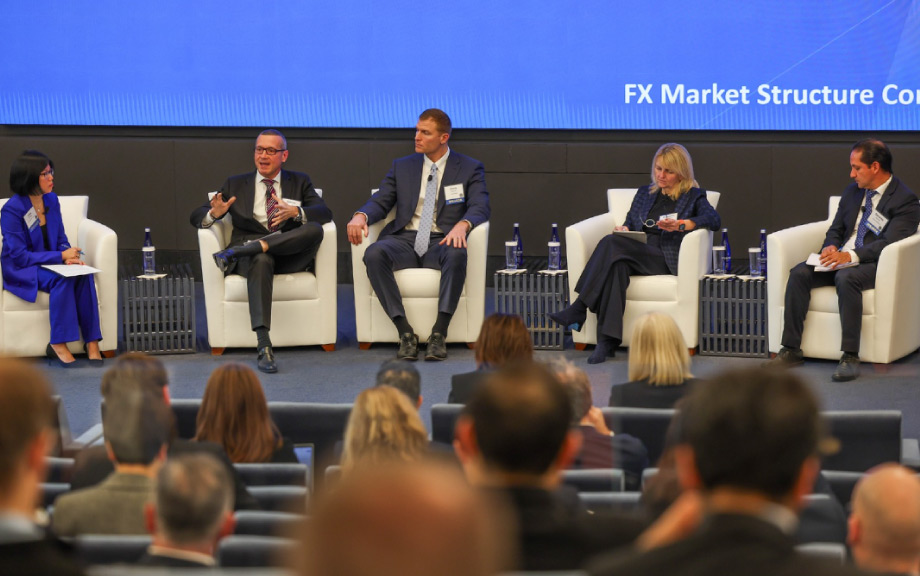
Diverse Landscape Offers Greater Customization for Liquidity Consumers
Another theme discussed was the decentralized nature of liquidity provision. Rather than viewing this fragmented landscape as challenging, panelists highlighted the benefits of customization that multiple liquidity pools can offer clients. They emphasized that a one-size-fits-all liquidity source wouldn’t necessarily make sense for diverse FX liquidity consumers.
Panelists also highlighted the growing diversity of liquidity providers, including among the different types of nonbank financial institutions (NBFIs) in the market. As the FX market landscape becomes less dominated by banks, NBFIs are increasingly offering alternative sources of liquidity to clients. Speakers noted that NBFIs’ perceived speed and pricing advantages over banks in liquidity provision are typically offset by a relatively smaller breadth of products, narrower client base, and less capacity for credit extension. Panelists viewed NBFIs’ market presence as offering banks a symbiotic relationship rather than a purely competitive one.
Moving beyond spot FX to derivatives, panelists flagged the FX swaps market as having the greatest potential for further evolution. While execution methods in FX swap markets have moved toward more electronification, only about a quarter of volumes are traded electronically, compared with almost three-quarters in spot. Dealers have also increasingly internalized their activity in swaps, matching offsetting client orders internally without accessing external liquidity. Panelists noted that the swaps and forwards markets lack the transparency of spot markets, given their largely bilateral over-the-counter nature and the lack of a universal pre‑trade benchmark for pricing forward rates. They also said that a primary electronic market for FX swaps would enhance transparency in this market.
FX Global Code’s Critical Importance to Buyside Firms
The Chair of the Global Foreign Exchange Committee (GFXC), a global forum of central banks and private sector participants that promotes, maintains, and updates the FX Global Code (the Code), moderated a panel with buyside firms about their experiences incorporating the Code’s principles into their internal policies. Introduced in 2017, and updated every few years, the Code aims to maintain a set of principles focused on supporting a fair and transparent FX marketplace.
While more than a thousand market participants have formally adhered to the Code, panelists agreed that there is a need for greater adoption among certain buyside segments. Panelists pushed back on the misperception that the Code was exclusively created by and for sell-side participants and highlighted the critical importance it has for the buyside. In particular, they spoke about the Code’s value in promoting frictionless markets, setting clear expectations among participants, and improving client engagement, which should benefit all types of FX market participants. They also emphasized its importance in maintaining a guide for good market practices in the absence of universal FX market regulations.
The panelists highlighted the Code’s role as a living document that evolves with changes in the market. The most recent review strengthened guidance on mitigating FX settlement risks and increased transparency around certain types of FX transactions and client-generated data. Panelists emphasized that these topics—in addition to others including guidance on derivatives markets and trading protocols—are of particular interest and relevance to buyside firms. In sum, panelists described the Code as more than just a “nice to have,” but rather as a critical resource for the market to operate effectively and efficiently.
Innovative Technologies Expected to Improve FX Market Functioning
The conference ended with a session focused on the evolving technological landscape across FX markets. Panelists highlighted the operational benefits of blockchain infrastructures, including the improved liquidity of round-the-clock clearing, broadened access to more exotic currencies, and reductions in settlement times and reconciliation efforts. They also noted how smart contracts allow for built-in compliance via self-executing code that can embed compliance, audit, and settlement rules at the asset level. This ability should help reduce operational risks and improve system resiliency.
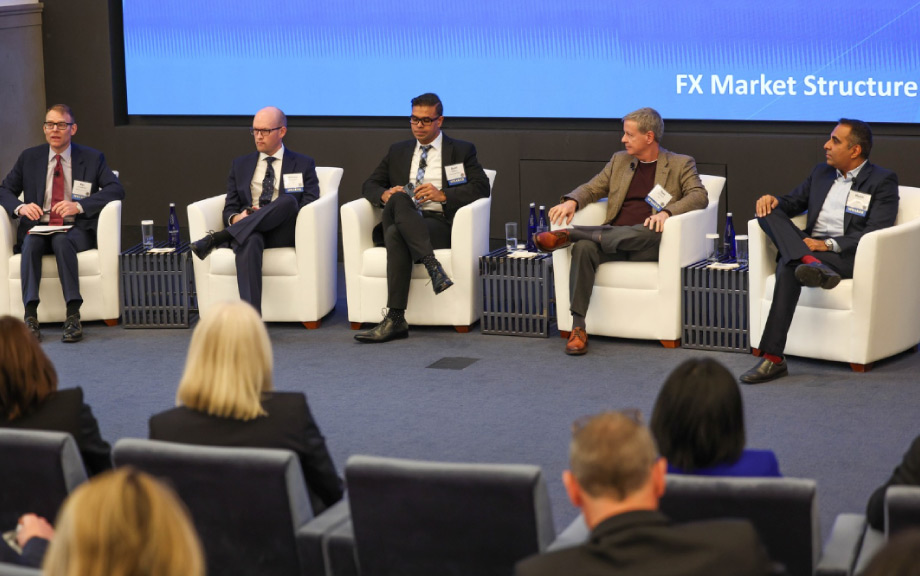
Speakers emphasized that decentralized finance could help facilitate faster cross-border payments for retail users and provide greater transparency and access. While fragmentation will continue due to various requirements by jurisdiction, collective efforts should focus on ensuring interoperability between new and existing systems.
Finally, technological innovation requires institutional roles to evolve, potentially leading to new participants in FX markets and redefined roles of intermediaries. As innovation continues, many questions, particularly on ownership and finality, remain, and resulting improvements should be evaluated against risks.
Looking Ahead
As the FX market’s structure continues to evolve at an increasingly rapid pace, it is critical to track its most important developments through continued engagement and collaboration among key industry stakeholders. As Anna Nordstrom said in her keynote remarks, the conference serves as an “important forum for convening people with different perspectives and expertise to help us better understand the past, present, and future of this critical market.” Given the value of this annual gathering, the New York Fed looks forward to convening another conference in 2026.
Dan Reichgott is an advisor in the New York Fed’s Markets Group.
Fabiola Ravazzolo is an advisor in the New York Fed’s Markets Group.
Lisa Chung is head of the Domestic and International Markets Function in the New York Fed’s Markets Group.
The views expressed in this article are those of the contributing authors and do not necessarily reflect the position of the New York Fed or the Federal Reserve System.
