










39 posts on "Monetary Policy Implementation"
September 25, 2026
Comparing Select Central Bank Frameworks for Steering Interest Rates

Many advanced economy central banks—including the Federal Reserve, the Bank of England (BoE), and the European Central Bank (ECB)—responded to the COVID-19 pandemic by conducting asset purchases to support functioning in sovereign bond markets and ease financial conditions. As a result of these purchases, central bank balance sheets grew to historic levels. Since then, these central banks have aimed to reduce their securities holdings and have seen the size of their balance sheets decline from COVID-era peaks (Figure 1). All three central banks have developed tools to ensure they can maintain strong rate control even as their balance sheets have been shrinking.
Posted in Monetary Policy Implementation | Permalink
September 22, 2026
Key Takeaways from President Williams’s Speech at the 2026 U.S. Treasury Market Conference

On Tuesday, September 22, New York Fed President John Williams spoke at the 2026 U.S. Treasury Market Conference about how innovations in market structure have impacted monetary policy implementation.
Posted in Monetary Policy Implementation | Permalink
September 1, 2026
A Framework for Understanding the U.S. Treasury Repo Market

The overnight U.S. Treasury repo market has experienced remarkable growth, with underlying transaction volumes for the Secured Overnight Financing Rate (SOFR) expanding from around $1 trillion in early 2022 to $3 trillion today. At the same time, this essential component of the financial system has become increasingly complex, with new segments introduced as market participants adopt central clearing. This article discusses a simplified framework to understand the complex mechanics and flows of the evolving market. This concept, referred to as the Client Segments Framework, helps the Open Market Trading Desk at the New York Fed (the Desk) monitor the repo market, an important market for the transmission of monetary policy, and report conditions to key stakeholders.
August 13, 2026
The Future of Market Liquidity and Functioning Workshop: Preparing for a Wave of Change

The Future of Market Liquidity and Functioning Workshop, which the New York Fed co-hosted in July with The Clark Center for Global Markets at the University of Chicago Booth School of Business, focused on forthcoming changes in securities clearing, potential innovations in payments processing, and how both could impact the underlying structure of markets, market functioning, and monetary policy implementation.
August 3, 2026
Key Takeaways from President Williams’s Interview with Reuters
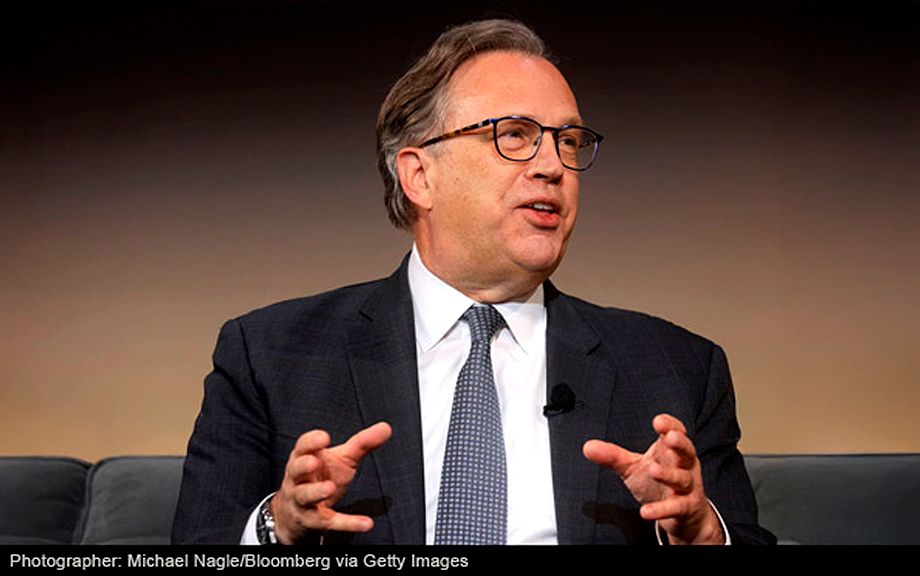
On Monday, August 3, Reuters published a transcript of an interview with New York Fed President John Williams, who discussed his outlook for inflation, monetary policy, and the FOMC’s commitment to achieving price stability.
Posted in Monetary Policy Implementation | Permalink
March 31, 2026
The Implementation of Reserve Management Purchases to Maintain Ample Reserves

In December 2025, the Federal Open Market Committee (FOMC) determined that reserves had declined to ample levels and, consistent with its May 2022 plans, instructed the New York Fed’s Open Market Trading Desk (the Desk) to begin reserve management purchases (RMPs) to maintain reserves within an ample range. These RMPs—which increase the size of the Fed’s balance sheet and the amount of reserves in the banking system—would consist of Treasury bills and, if needed, other Treasury securities with remaining maturities of three years or less.
Posted in Monetary Policy Implementation | Permalink
January 16, 2026
How Monetary Policy Tools Helped Limit Money Market Pressures at Year‑End

Similar to prior year-ends, overnight secured money markets experienced rate pressures on and around Dec. 31, 2025. While these pressures were substantial, they were short-lived, and overall market functioning was orderly. Moreover, higher overnight rates in the repurchase agreement, or repo, market did not spill over to the Federal Reserve’s policy rate, the federal funds rate. Orderly conditions over year-end followed recent decisions by the Federal Open Market Committee (FOMC) to resume balance sheet growth and enhance standing repo (SRP) operations. These recent decisions were made to maintain ample liquidity in the financial system and keep the federal funds rate within the target range set by the FOMC.
December 23, 2025
Standing Repo Operations in the Federal Reserve’s Monetary Policy Implementation Framework

The Federal Reserve (Fed) implements monetary policy through an ample reserves framework, where a sufficient supply of reserves allows the federal funds rate and other short-term interest rates to be primarily controlled through administered rates set by policymakers. In this article, we provide insight into some of the tools the Fed uses to implement monetary policy, with a focus on recent changes to standing repo operations.
Posted in Monetary Policy Implementation | Permalink
November 19, 2025
Understanding the Federal Home Loan Bank System: What It Is and Why It Matters

The Federal Home Loan Bank (FHLB) system was created almost a century ago and has evolved over time to play an important role in monetary policy implementation. It is a key participant in money markets, providing liquidity to thousands of financial institutions in the U.S. This article looks at why this system was created, how it is structured, and the composition of its balance sheet.
August 25, 2025
Key Takeaways from President Williams’s Remarks on the Economic Stars

In remarks at a conference in Mexico City on August 25, New York Fed President John C. Williams addressed three questions pertaining to the importance, measurement, and use of time-varying unobservable variables at central banks, with a particular focus on the neutral rate of interest, or r-star.
