










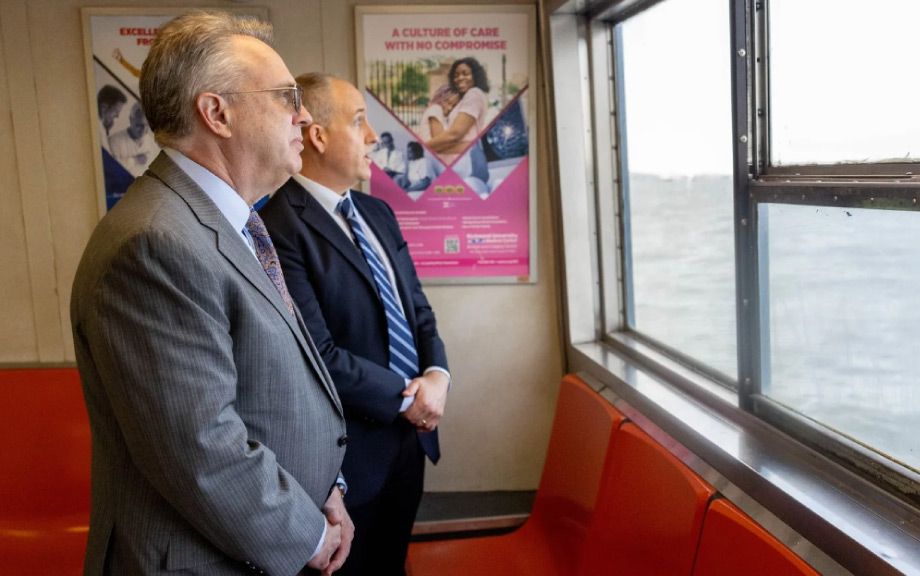
On a recent regional visit to Staten Island, President John C. Williams and New York Fed staff met with elected officials and leaders from business, nonprofits, and education to better understand the borough’s unique challenges and opportunities.
With a population of roughly 500,000 residents spread out over 60 square miles, Staten Island tends to look more suburban than other parts of New York City. While it’s the city’s smallest borough by population, if it were a stand-alone city it would be the nation’s 38th largest, after Atlanta. Residents sometimes call Staten Island the “Forgotten Borough,” partly due to a long-held feeling that New York City government favors the larger boroughs.
The island’s North Shore area is the most populous portion of the borough, home to about 38 percent of all residents as of 2024 and the St. George Terminal for the Staten Island Ferry, the main point of connection with Manhattan. The area is younger and more racially and economically diverse than the rest of the borough, and also has a higher poverty rate. The South Shore, meanwhile, remains suburban, with parks, small businesses, and shopping centers. Parkland accounts for a third of the island.
One topic from the day’s discussions was how a “one-size-fits-all” approach to transportation and development in New York City, created with denser boroughs in mind, sometimes hurts Staten Island. For example, the island is more car-dependent than the rest of the city and has far fewer public transportation options, so rules eliminating parking requirements for new construction put an outsized strain on Staten Islanders. Other themes included affordability challenges, the need for more housing to attract new businesses and workers, and the differences between the more densely populated North Shore and the rest of the island.
Job Growth and New Investments
Staten Island has experienced solid job growth in recent years. Employment is now more than 8 percent above pre-pandemic levels, and the transportation and warehousing sector has grown considerably and now accounts for 15 percent of Staten Island’s jobs, according to New York Fed researchers.
The New York Fed team visited the College of Staten Island Innovation Hub near the St. George Ferry Terminal. The hub, which opened in March, features flexible co-working areas, collaboration zones, and state-of-the-art labs. It is intended to incubate businesses and provide workforce development and support to help small businesses adapt to technological changes. The hub is part of Lighthouse Point, a mixed-use development that will include more than 100 new residential housing units and 85,000 square feet of retail space. The project is part of the larger North Shore Action Plan, which aims to create waterfront and transit access, 20 acres of open space, and more than 2,000 new housing units, officials say.

The day also included a site visit to Pratt Industries, the only mill in New York City producing 100-percent recycled paper. The mill processes roughly 300,000 tons of paper annually, most from New York City recycling, and converts residual paper to energy through a gasification plant in Georgia. The mill also runs a treatment facility for water used in the recycling process, which operates 24/7. Site leaders say its energy costs are three times higher than the company’s other U.S. sites. Other challenges include the city’s stringent greenhouse gas emissions laws and fires sparked by lithium-ion batteries thrown in with paper recycling. The mill is exploring new technologies, such as robotic quality control and X-ray detection to identify and remove batteries from the waste stream.
Transportation: A Borough Dependent on Cars
Staten Island has a single train line that starts and ends on the island, meaning residents drive more than in other boroughs. About half of Staten Island’s workers commute within New York City—mostly to Manhattan and Brooklyn—with others commuting elsewhere in the region, according to New York Fed researchers and meeting participants.
A 2024 report found 62 percent of commuters relied on motor vehicles for their commutes, more than double the citywide average of 27 percent. During the visit, community leaders talked about how no new roads have been developed in decades, pointing to a stretch of the Staten Island Expressway where a High-Occupancy Vehicle lane runs for a portion before merging with other traffic, creating bottlenecks.
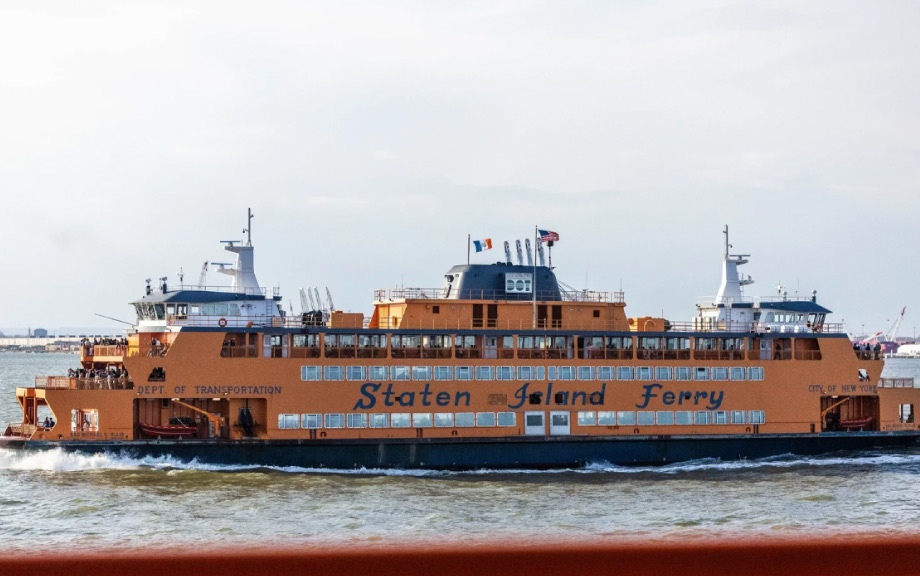
While residents say the free Staten Island Ferry to Manhattan is a lifeline, getting to the ferry terminal is a challenge for those on the South Shore. Leaders spoke about the potential for high-speed ferries to make commutes faster and easier.
An Affordable Borough Faces Affordability Challenges
Nonprofit leaders on Staten Island highlighted the need for better funding for youth programs, healthcare, senior services, and immigration services following federal funding cutbacks. Nonprofit leaders also said the borough struggles for attention from large foundations and corporate donors, adding that they see a disconnect between the borough’s reputation for affordability and the struggles clients face. Leaders who run food pantries say visits have increased, with residents who previously visited once a week returning more frequently.
Meeting participants emphasized the need to target investments to community needs. For example, the Lighthouse Point development on the North Shore includes affordable residential housing, with rents pegged to area median income. Meanwhile, local leaders and residents described concerns about an investment in large-scale battery energy storage, as proposed sites are near homes and businesses.
Stability and Opportunity
Throughout the visit, Staten Island leaders talked about their quality of life, with a focus on the borough’s suburban-style housing, good schools, lower costs relative to other boroughs, low crime rate, and large population of civil service workers, which brings stability. They expressed confidence that the island can leverage its waterfront and continue to build on the strengths that make it a unique and vibrant part of New York City.
Shawn Phillips is the head of external engagement in the Communications and Outreach Group at the New York Fed. She is responsible for broadening and deepening relationships with civic, business, academic, and other stakeholders within the Federal Reserve’s Second District.
Ellen Simon is a corporate communications specialist in the Communications and Outreach Group at the New York Fed.
The views expressed in this article are those of the contributing authors and do not necessarily reflect the position of the New York Fed or the Federal Reserve System.
