










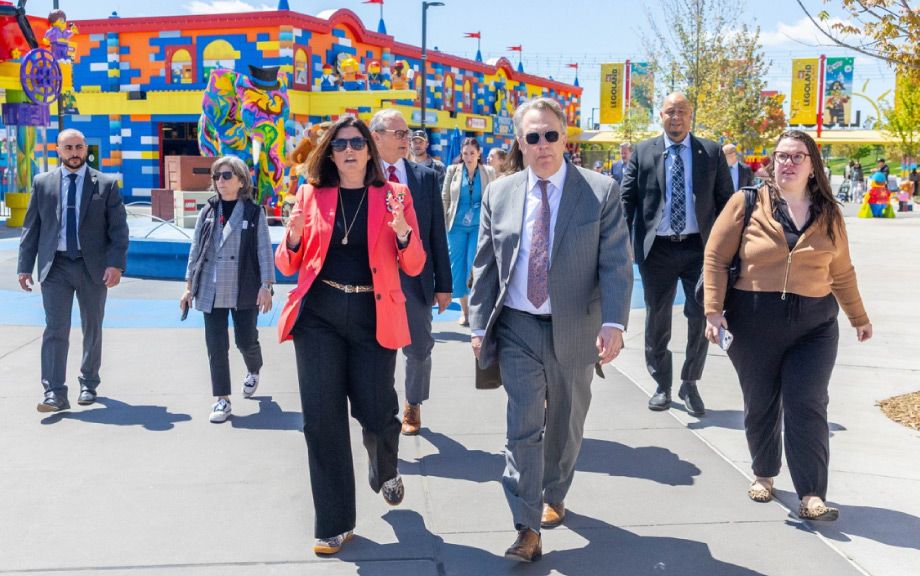
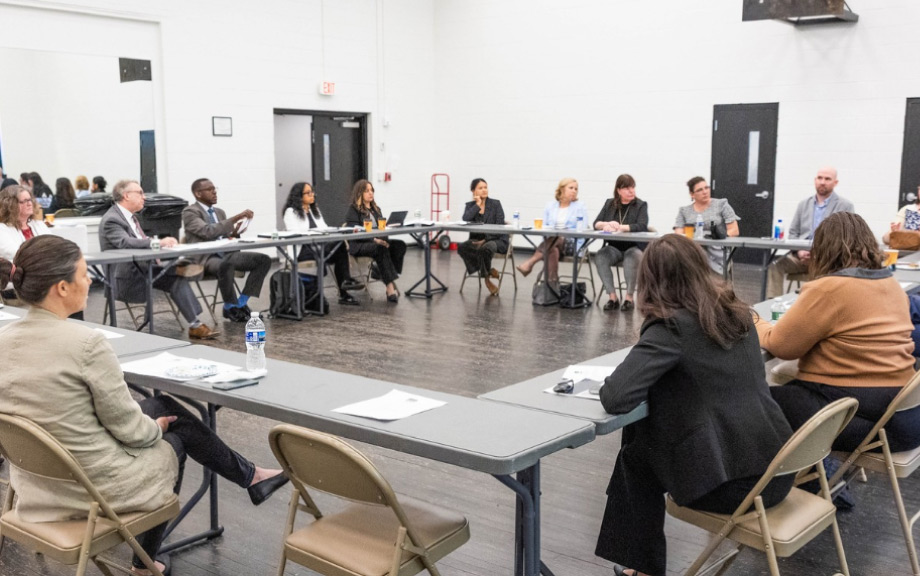
New York Fed President John C. Williams and staff recently visited Orange County, New York, to hear from local leaders about challenges and opportunities in this growing region.
Orange County is a mix: part New York City bedroom community, part transitioning post-industrial region, and part rapidly growing Hasidic enclave. The county, just 50 miles north of Midtown Manhattan in the Hudson Valley, has strong ties to New York City, with about one in eight workers commuting there. Its population of about 400,000 has grown 10 percent since 2010, faster than the rest of the New York Fed’s Second District. But that growth varies geographically, with some areas seeing little growth while others are expanding rapidly.
The county’s largest cities are Middletown, which serves as the county’s commercial and healthcare hub; Newburgh, once a thriving Hudson River manufacturing hub; Goshen, the county seat; Warwick, a bustling tourist destination; and Port Jervis, a former railroad town.
The county is also home to Satmar Hasidic village Kiryas Joel, which has 44,000 residents, making it the county’s largest population center. The village’s population has more than doubled since 2010, accounting for much of the county’s population increase.
Growth from Tourism, Hope from Urban Investments
The healthcare, government, and retail sectors are the county’s economic backbone. The United States Military Academy at West Point is one of the county’s single largest employers, with more than 4,000 civilian employees plus military personnel. Woodbury Common, one of the highest-grossing retail outlet centers in the country, employs more than 1,000 workers across its 200-plus stores and is a significant driver of sales tax revenue and tourism traffic.
During the visit, local leaders talked about the importance of tourism to economic growth. About 14,000 people work in the county’s tourism sector, they said, with top destinations including Woodbury Common, Storm King Art Center, and Legoland New York Resort. Leaders said visits to the county fall into four buckets: family fun; food and drink; agritourism, such as apple picking; and sporting events at West Point. While visits from Canada dropped beginning in 2025, a growing film industry is boosting restaurants and hotels in the area, leaders said.
Other economic drivers include remote workers, agriculture, and urban renewal. The county saw an influx of affluent residents during the pandemic, especially to wealthier towns closer to New York City, such as Warwick. Many who moved to the area have stayed, local leaders said. One reason: Orange County is the northernmost place New York City municipal workers are allowed to live.
The county’s rich natural resources support a strong agricultural sector that specializes in fruit trees. However, farmers are worried by a sharp increase in fertilizer prices due to the conflict in the Middle East, local leaders said. They are also dealing with an early spring heatwave followed by a frost, which may harm fruit harvests this year.
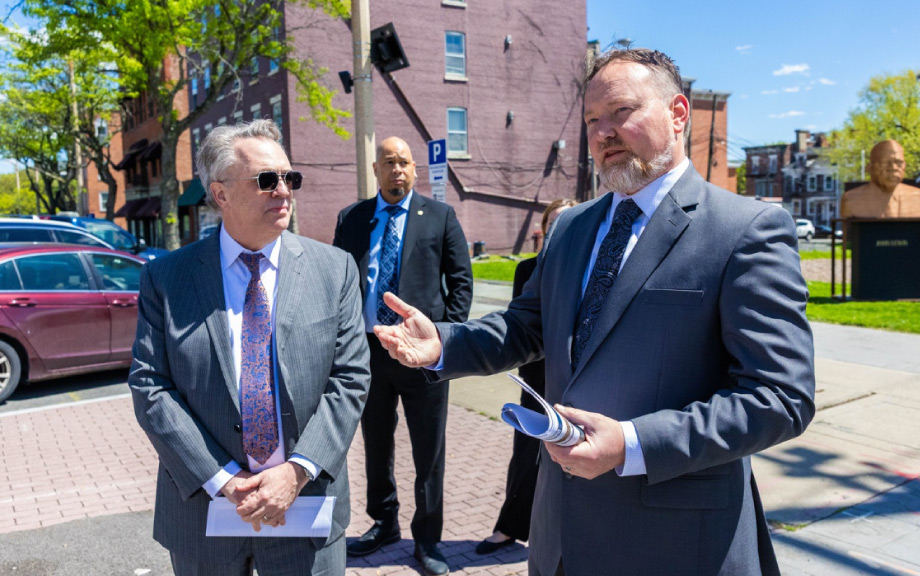
Downtown revitalization efforts are focused on helping the county’s cities. The visit featured a walking tour of Newburgh’s Liberty Street, the focus of announced state investments in new housing and water, sewer, and roadway infrastructure. The Liberty Street area has attracted design-forward restaurants and boutiques. Still, nearly a quarter of Newburgh’s households are below the poverty line, and the median household income is $57,000,
Challenges: Transportation and Affordable Housing
One limiting factor for the county’s economic growth is a lack of mass transit, leaders said. While Metro-North and Amtrak trains across the Hudson River offer service to and from New York City, Poughkeepsie, and Albany, visitors and locals in Orange Country rely on cars and, to a lesser extent, buses. Woodbury Common addressed the challenge with dedicated private buses that run roundtrip from Manhattan, but leaders at other tourist destinations say a lack of transit is a limiting factor to revenues.
The lack of mass transit also makes access to healthcare, social services, and groceries a challenge for locals. The reliance on cars compounds workforce obstacles the county faces. Those include an aging workforce, the need for more workers in skilled trades, the loss of younger workers to southern states, and a lack of childcare services.
Leaders see opportunities to improve at least one facet of the county’s transportation infrastructure. New York Stewart International Airport has long been viewed as an underutilized asset. Operated by the Port Authority of New York and New Jersey, Stewart is a full-service airport 60 miles from Manhattan with significant runway capacity.
As in the rest of the region, affordable housing is a top concern for local officials. Home prices have surged more than 60 percent since the onset of the pandemic. Prices were initially driven up by an influx of remote workers during the pandemic, but more recently by exceptionally low supply, like much of the rest of the region. Rents have also increased sharply.
One city leader cited a 3.5-year waitlist for affordable housing. Another talked about unhoused families living in hotels at significant public expense. Leaders described the complexity of financing affordable housing developments, which often require layering multiple sources of public and private funding. The process is further complicated by coordination challenges among state agencies, leaders said. Misaligned requirements and timelines mean that a denial from one agency can jeopardize funding already secured from others.
Finally, water and sewer limitations, including a reliance on septic systems, have impeded development, officials said. And officials are bracing for a tsunami of demand for electricity as AI takes off.
Putting the Pieces Together
With assets that include a thriving tourism sector, a growing film business, and enviable proximity to New York City, Orange County leaders are confident the area is primed for both growth and renewal in the years ahead.
Shawn Phillips is the head of external engagement in the Communications and Outreach Group at the New York Fed. She is responsible for broadening and deepening relationships with civic, business, academic, and other stakeholders within the Federal Reserve’s Second District.
Ellen Simon is a corporate communications specialist in the Communications and Outreach Group at the New York Fed.
The views expressed in this article are those of the contributing authors and do not necessarily reflect the position of the New York Fed or the Federal Reserve System.
