










In remarks in New York City on July 15, New York Fed President John C. Williams spoke about the U.S. economic outlook, New York City’s economy, and how the Federal Open Market Committee (FOMC) is working to achieve its dual mandate goals of maximum employment and price stability at a time of great uncertainty.
He said:
“While the effects of the Middle East conflict undoubtedly pose significant and unpredictable risks to economies around the world, the U.S. economy so far has absorbed these events fairly well.”
“Growth in the economy is solid and on trend, and the labor market is likewise solid and stable. But with inflation running high, it is imperative that we restore it to the Federal Reserve’s 2 percent longer-run goal on a sustained basis. The current stance of monetary policy is well positioned to do that.”
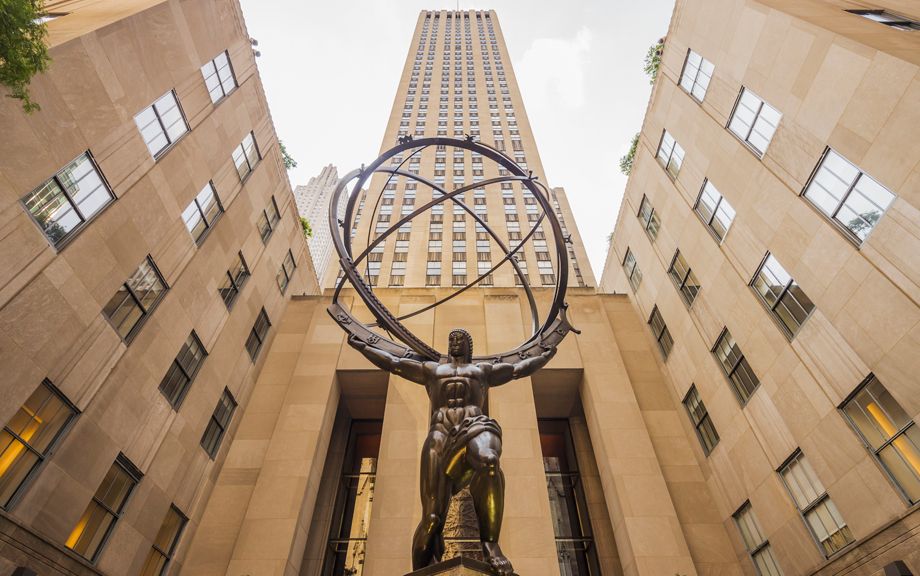
“The economy can be highly unpredictable and uncertain. But the architects of this building remind us that we must be guided by knowledge and wisdom. In assessing the future path of monetary policy, my views, as always, will be based on the evolution of the totality of the data, the economic outlook, and the balance of risks to the achievement of our maximum employment and price stability goals.”
President Williams said that the U.S. economy has remained remarkably resilient amid uncertain and challenging times, noting that for the past year and a half, “we’ve seen solid GDP growth, at around 2 percent.”
“There are pockets of red-hot growth fueled by optimism, productivity increases, and strong investment,” he said. “But the economy has been only growing near its trend rate because weakness in other sectors has been offsetting these gains.”
He attributed this resilience in large part to “strong optimism around technology and AI, leading to surging business investment and stock market gains that are boosting consumer spending.”
In discussing the employment side of the Fed’s dual mandate, President Williams said that we’re seeing “signs of resilience and stability” and pointed to a number of labor market measures to demonstrate that reading.
Meanwhile, overall inflation is “unquestionably too high at about 4 percent,” he said, well above the FOMC’s longer-run goal of 2 percent.
President Williams explained that this elevation primarily reflects three drivers: the effect of higher tariffs on imported goods, supply chain disruptions and higher energy and commodity prices owing to the conflict in the Middle East, and the robust demand for certain categories of goods and electricity associated with the surge in technology investment.
“I am confident that these investments will support strong productivity growth in coming years,” President Williams added. “But, right now, we’re in a race between available supply and surging demand. . . . [H]igher costs are starting to affect prices.”
While the three factors he mentioned have driven inflation over the past year, President Williams acknowledged that there are “encouraging reasons to expect that inflation has peaked and should edge down in coming quarters” and described his thinking in great detail.
He then turned to describing New York City’s economy, saying “a series of unprecedented events has created new and daunting challenges for the city.”
“Despite these very real ongoing challenges, the city’s economy has fully recovered from the pandemic and is experiencing strong momentum for future growth,” he said, pointing to employment growth in the technology sector.
Turning back to the U.S. economy more broadly, he said that while there are many sources of stability, “substantial risks remain.”
“The full effects of the AI investment surge on growth, employment, and inflation are hard to predict. And the global supply disruptions stemming from the conflict in the Middle East continue to be a source of risk to the outlooks for both growth and inflation,” he said.
In terms of his economic outlook, President Williams said:
- He expects real GDP growth to be around 2 to 2-1/4 percent this year and over the next two years.
- With growth running modestly above his estimate of its potential rate of 2 percent, he expects the unemployment rate to edge down very gradually to 4 percent in 2028.
- He expects overall inflation to decline to around 3-1/4 percent by year-end, then continue on a glide path toward the FOMC’s 2 percent goal in 2027 before landing on target in 2028.
Julie Lasson is an executive communications specialist at the New York Fed.
The views expressed in this article are those of the contributing authors and do not necessarily reflect the position of the New York Fed or the Federal Reserve System.
