










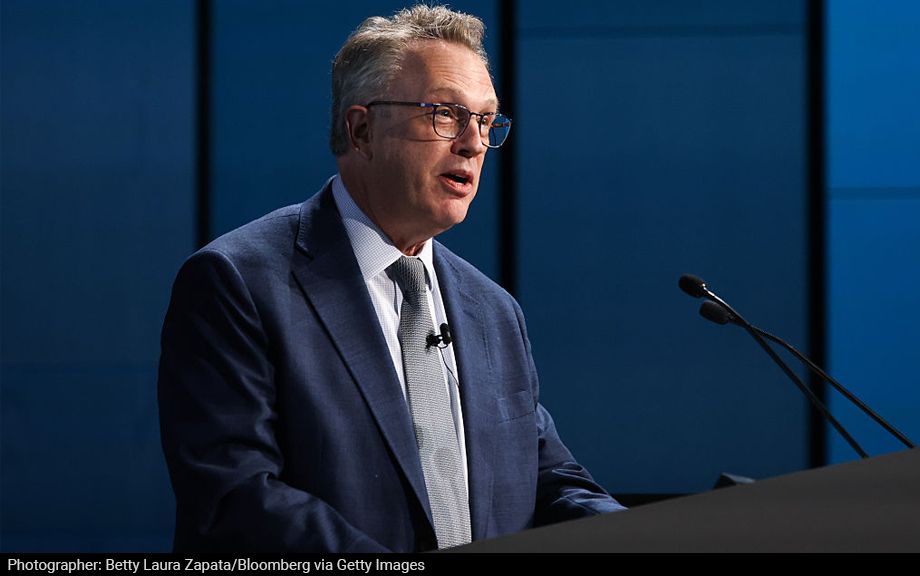
In remarks at the University at Buffalo on September 29, New York Fed President John C. Williams discussed the U.S. economy, monetary policy, and how the Federal Reserve is working to achieve its dual mandate of maximum employment and price stability.
He said:
“It is imperative that we return inflation to our 2 percent target on a sustained basis. To do so, we must make certain that adverse inflationary disturbances do not become entrenched, and that any second-round effects on inflation remain muted.”
“With the policy action we took at our September meeting, there is no need for urgency, and we have time to gather more information. The accumulation of more data should provide greater clarity on the underlying trends in the economy and the associated risks to achieving our goals—and thereby the appropriate setting of monetary policy.”
“If the economy evolves in a manner broadly consistent with my forecast, one further upward adjustment of the federal funds target range may be appropriate late this year to support a timelier return of inflation to target. But that is just my forecast, and time—and the totality of the data—will tell.”
President Williams kicked off his remarks by discussing the U.S. economy. “Right now, the data indicate that, despite large shocks and elevated uncertainty, the underlying momentum in the U.S. economy is solid and even showing signs of strengthening,” with real GDP growing at about 2 percent for the past year.
But given robust consumer spending, stock market gains, and the surge of business investment powered by the AI buildout, he said he is often asked why the economy is not growing even faster. Among the reasons: The labor force is no longer contributing much to the economy’s underlying growth, and a significant share of AI-related investment is now being met by imported goods “and therefore not contributing as much to U.S. GDP growth,” he said.
“Looking ahead, with all the AI investment underway, hopefully we will see an improving trend in productivity and the economy’s potential, but it may take a while for these benefits to be fully realized,” he said.
In discussing the Fed’s dual mandate, President Williams said that on the employment side, “the data show that the labor market continues to be solid—and has even strengthened a bit on the margin.”
However, with inflation at 3.7 percent, well above the Fed’s longer-run goal of 2 percent, the price stability side “is where the challenge lies,” he said.
President Williams said there are three key drivers to inflation’s rise: higher tariffs on imported goods; supply-chain disruptions and higher energy and commodity prices owing to the conflicts in the Middle East and elsewhere; and robust demand for certain categories of goods and services associated with the surge in AI-related investments.
Of the three, he said tariffs are no longer adding to inflation in goods prices, although that could change if new tariffs are instituted.
But the other two remain. “The inflationary impact of the AI-related demand shock is increasingly salient, and I now expect somewhat larger and longer-lasting effects from energy prices on inflation,” he said.
However, President Williams said that he has not seen evidence that the effects of these drivers are “spilling over into broader and more persistent inflation.”
President Williams said he is “firmly committed to achieving the Fed’s dual mandate goals of maximum employment and price stability.”
“As I consider the future path of monetary policy, I will continue to assess the underlying trends in inflation and the balance of supply and demand in the economy,” he said.
In terms of his economic outlook, President Williams said he expects:
- Real GDP growth to average about 2-1/4 percent this year and next year
- The unemployment rate to edge down to about 4 percent over the next year
- And overall inflation to come in at 3-1/2 percent this year, before slowing to just above 2 percent next year and reaching the Fed’s longer-run goal of 2 percent in 2028, as the effects of tariffs move further into the rearview mirror, energy prices normalize, and the demand and supply of AI-related goods move back toward better balance
Judy DeHaven is an executive communications specialist at the New York Fed.
The views expressed in this article are those of the contributing authors and do not necessarily reflect the position of the New York Fed or the Federal Reserve System.
