










As part of the New York Fed’s effort to understand economic conditions across the Federal Reserve’s Second District, the Community Development team visited San Juan, Puerto Rico in September to hear from community leaders about near-term challenges and longer-term opportunities in the metropolitan area. Conversations centered on water system reliability; housing affordability and availability; public health and nutrition; and a promising development in the Island’s food system.
Water System Reliability
The local water authority began rationing water in San Juan and the surrounding area in August due to shortages. As a result, residents have had to spend hours queuing at water trucks. Local leaders attribute water rationing to a historic drought and poor system management practices. Of the 507 million gallons per day the local water authority produces, about half ends up as a non-revenue water loss through factors that include inaccurate meters and leaky pipes, according to a water authority engineering report. Shortages historically have arrived near the end of the dry season in March, and not during the rainy months, which run through November, they said. Heavy rainfall over two days during mid-September relieved water cutoffs in the short term, but leaders said structural challenges persist.
Housing Affordability and Availability
Housing costs have increased rapidly over the past six to 10 years, even as the Island’s population has declined. New construction has been targeted at the luxury segment, while some of the existing housing stock has shifted to short-term rentals or second homes for mainland buyers, increasing prices for local households, housing advocates said.
Housing advocates on the Island say the average home price is over $400,000, making homes unattainable for many families earning the median annual household income of $25,100. Many families that secured federal reconstruction and relocation vouchers following Hurricane Maria in 2017 have been unable to find homes they can afford, according to officials from Habitat for Humanity de Puerto Rico. The government has approved several extensions for the vouchers, which have values of up to $200,000, but local housing advocates worry that future extensions will not be granted.
Puerto Rico’s housing challenges are compounded by the prevalence of vacant or abandoned homes. The Census Bureau estimates the Island has more than 374,000 vacant housing units, representing about 23% of its total housing, but several housing advocates said the real number of abandoned houses is likely even higher.
Some municipalities are working to tackle the problem. Under a public nuisance framework known as estorbos públicos, abandoned properties can be acquired by municipalities. Caguas, Bayamon, and San Juan are advancing strategies to bring abandoned buildings into productive use. Housing advocates said the process can take several years. Still, in many cases, rising material and labor costs make rehabilitation more economical than demolition, although specialized contractors remain scarce. Also, in response to the water shortages, plans to incorporate cisterns add additional costs.
Still, local housing advocates pointed to some progress. Habitat for Humanity worked with the municipality of Caguas to redevelop two adjacent buildings into one 10-unit building. The redevelopment preserved the buildings’ historic features, and two of the new units are fully accessible. The sale prices will be between $90,000 and $100,000 per unit, with subsidies from Habitat covering 40% to 50% of the buyers’ costs. Financing for the project included New Markets Tax Credits to Habitat Capital and loans from a mainland bank.
Public Health: Nutrition
Roughly 72% of Puerto Rico residents live with chronic diseases, straining the Island’s medical system and adding to the population’s financial and caregiving burdens. Health advocates emphasized that improving public health is essential to strengthening Puerto Rico’s long-term economic resilience. They said that integrating food access, nutrition, and local agriculture into a strategy that supports better health outcomes and a more robust local economy is an important opportunity.
Nutriendo PR, a Puerto Rico-based nonprofit, seeks to strengthen the connections between food systems, public health, and economic development. “Puerto Rico’s economy and healthcare system can mutually benefit from investments in prevention that address the conditions shaping people’s health,” said Angie Diaz, Nutriendo’s executive director.
Public health and nutrition programs reach a substantial share of Puerto Rico’s residents. As of August 2026, approximately 1.38 million people were enrolled in Medicaid and Medicare, equivalent to about 42% of the Island’s population. With some overlap, roughly 1.43 million people participated in Puerto Rico’s Nutrition Assistance Program (PAN) in 2026.
Local Industry and Cooperative Solutions
Leaders from the local pork industry said they are looking to cooperative solutions to remain competitive. They described how local producers’ market share fell from roughly 20% in the 1990s to about 3.6% today due to cheaper imports from the mainland. In response, pork producers formed the Cooperativa de Porcicultores de Puerto Rico y el Caribe in 2013. With support from the USDA and Fondo de Inversion y Desarrollo Cooperativo, the co-op acquired a slaughterhouse in Guaynabo to stabilize pricing and speed processing times.
Angel Rodriguez, president of the pork co-op, said it was difficult for small, local farmers to compete with the much larger mainland farmers. Farms in Puerto Rico hold five to 150 pigs, versus tens of thousands of pigs at mainland facilities, he said. But the new facility enables producers to control a larger portion of the value chain—from farm through processing and packaging to sales—helping reduce uncertainty and improve competitiveness.

Tony Davis is the director of community outreach and health in the Communications and Outreach Group at the New York Fed.
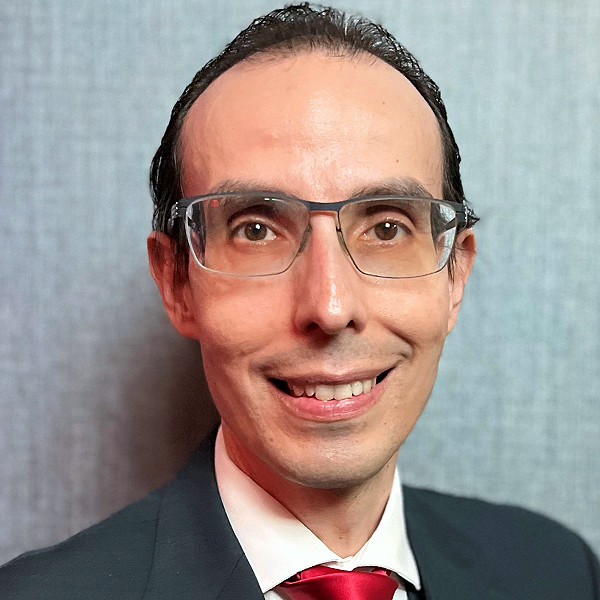
Javier Silva is a community development senior associate director in the Communications and Outreach Group at the New York Fed.
The views expressed in this article are those of the contributing authors and do not necessarily reflect the position of the New York Fed or the Federal Reserve System.